The Case for Co-governance for Public Education

Originally published at Nonprofit Quarterly, this interview centers the important work of the HEAL Together initiative, co-led by the Schott Foundation. Mike Woodward, Schott Foundation’s Director, Education and Civic Engagement, speaks to the role co-governance can play in communities building and exercising power.
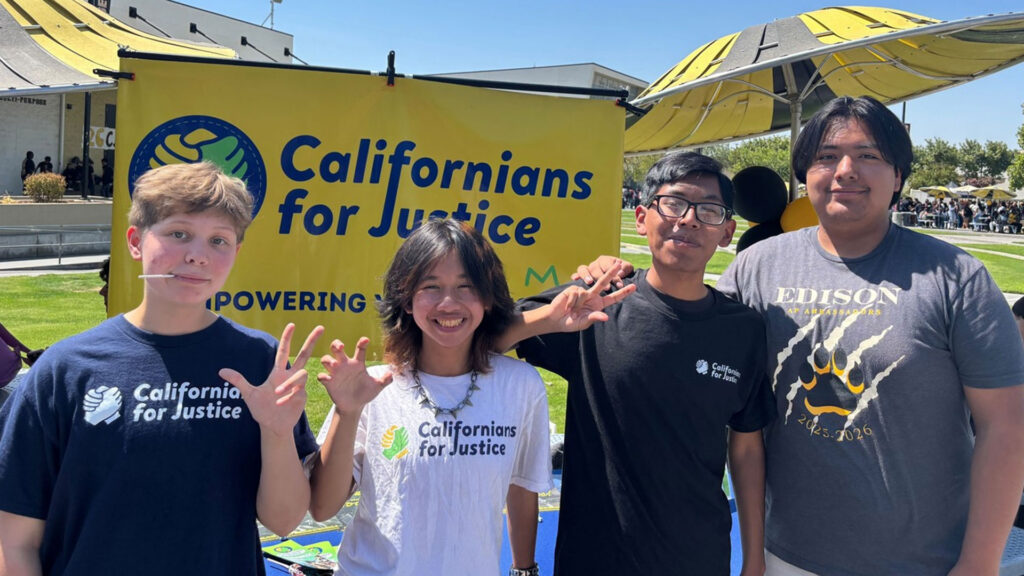
This conversation with public education advocates and thought leaders is part of a series in response to the June 2026 Colorlines article The Case for Co-governance. In concept and in practice, government and communities work together to make decisions and co-implement programs and policies. In our public schools, this means administrators, teachers, unions, parents and guardians, and students all work together. Race Forward’s HEAL (Honest Education, Action & Leadership) Together program in partnership with the Schott Foundation for Public Education and deep collaboration with the National Education Association (NEA) is grappling with questions of how deepening practices of co-governance in our public education systems could further strengthen the critical foundation of democracy.
James Haslam: When we began thinking about this project, we immediately saw numerous connections and examples how co-governance is being used and could be expanded in public education. We wanted to start this conversation by sharing how each of you see this concept of co-governance connected to your experience with public schools and more generally the purpose of public education.
Leigh Kennedy: The role of the [labor] union in public education has shifted over time to one that is much more comprehensive than what most people think of when they think of “the union.” Educators, through their unions, are well-positioned not only to advocate for traditional goals of salaries and better working conditions, but also to share responsibility for professional supports (e.g., training, mentoring, protected planning time) and for racial and social justice for students which can look like access to diverse instructional materials, protected recess, and protection from harsh immigration enforcement. This is the modern, comprehensive union. Educators and their unions are essential stakeholders in efforts to improve public education—not just as people impacted by decision-making, but as professionals who can and should share in that decision-making. At the end of the day, we all want the same thing: great schools that are a source of pride in our communities.
Mike Woodward: From my experience, the most sustainable education victories are rarely won by a single institution. These victories happen when educators, students, families, community organizations, philanthropy, and public leaders develop a shared understanding of both the problem and the responsibility for solving it. Co-governance is less about another engagement strategy and more about fundamentally redistributing how decisions get made. Communities that have historically been the subjects of education reform should become co-authors of it. Participation matters, but shared power is what transforms systems in ways that most benefit children, families, and communities.
At the Schott Foundation for Public Education, our work increasingly reinforces the idea that co-governance is both a means of building power and an expression of it. As communities come together to shape education priorities, advocate for systems change, and solve shared problems, they are not simply influencing decisions; they are developing the relationships, trust, leadership, and collective capacity needed to govern alongside public institutions over time. That is especially important as we center the well-being of young people because improving the systems that shape young people’s lives ultimately depends on communities having the power to shape those systems together.
“Educators and their unions are essential stakeholders in efforts to improve public education—not just as people impacted by decision-making, but as professionals who can and should share in that decision-making.”